
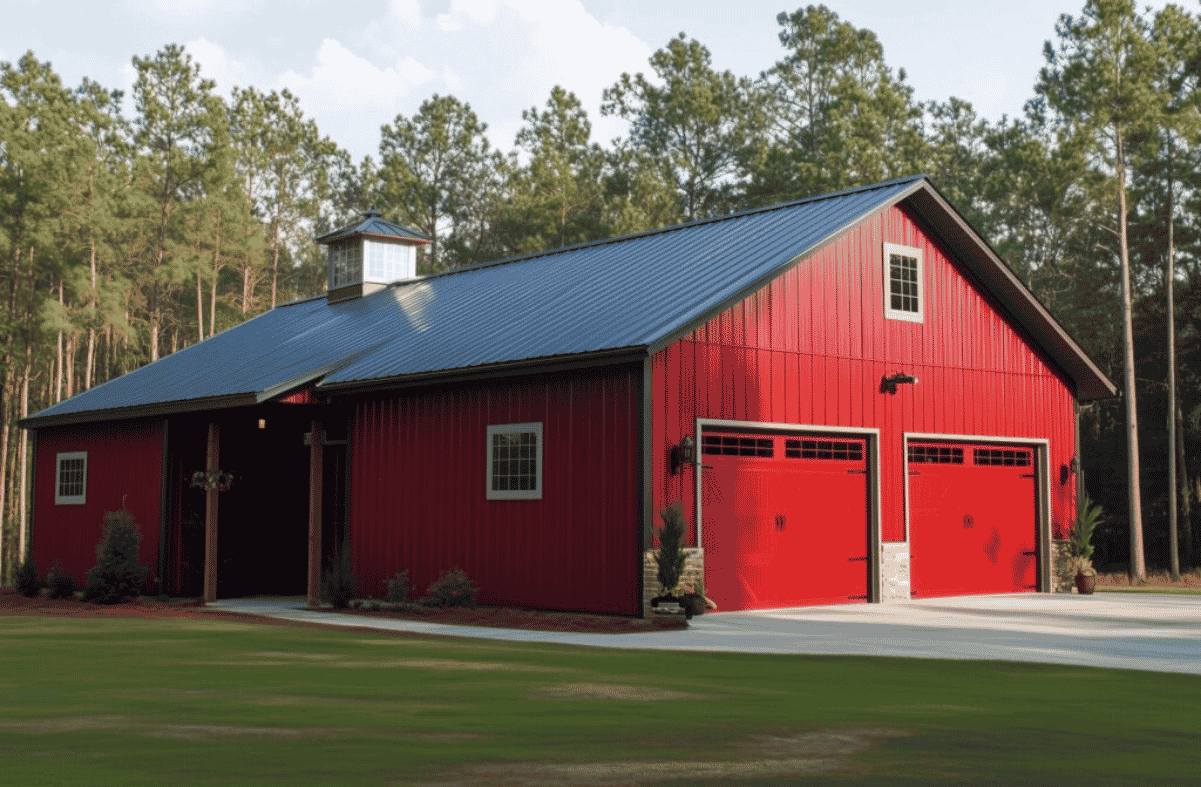
Financing a barndominium is possible, but it doesn’t work exactly like financing a traditional stick-built home. Some lenders hesitate to approve barndominiums because the property is harder to appraise and doesn’t fit neatly into standard mortgage categories, so knowing which loan types actually apply before you start shopping lenders can save a lot of frustration.
We hear this from clients constantly. They’ve done their homework on price, they know roughly what the build runs, and then they call a lender expecting the same process as buying an existing house. That’s usually where things slow down, not because the buyer isn’t qualified, but because the loan officer on the other end has never financed one of these before.
Why Barndominiums Are Harder to Finance Than Traditional Homes
Here’s the thing lenders actually care about. A mortgage is secured by the property itself, so the bank needs a reliable way to estimate what that property is worth if they ever had to sell it. Traditional homes have decades of comparable sales data to pull from. Barndominiums, especially in areas where they’re still relatively new, often don’t have enough recent comparable sales nearby for an appraiser to lean on.
That appraisal gap is the real reason financing gets complicated, not the construction method itself. A lender isn’t necessarily worried about the quality of a metal-shell home, they’re worried about not having a confident number to base the loan on.
Construction Loans vs. Traditional Mortgages
Most barndominium builds start with a construction loan rather than a standard mortgage, since there’s no finished house yet to secure a traditional loan against. The Consumer Financial Protection Bureau describes a construction loan as a short-term loan that covers the cost of building a home, with funds released in stages as work progresses rather than paid out all at once.
One thing that surprises many first-time barndominium buyers is how this affects the overall process. A construction loan typically converts to a permanent mortgage once the home is finished, and, depending on the lender, that’s either a single closing that handles both steps at once or two separate closings. A single-close loan is usually the more convenient option, since you’re not requalifying or paying closing costs twice.
USDA Financing: An Option Worth Understanding for Rural NWA Properties
Believe it or not, one of the more accessible paths for barndominium financing in this region comes through the USDA. The USDA’s Single Family Housing Guaranteed Loan Program offers 100 percent financing, no down payment required, for eligible buyers building or purchasing a home in a designated rural area, and a meaningful portion of Northwest Arkansas qualifies under that definition.
This isn’t a barndominium-specific program, but a lot of the acreage and rural lots where our clients build fall within USDA-eligible zones. If there’s one lesson we’ve learned helping clients navigate financing, it’s that checking USDA eligibility early, before falling in love with a specific lot, can open up a financing path that wouldn’t otherwise be available.
Comparing Common Loan Types for a Barndominium Build
| Loan Type | Typical Down Payment | Best Fit For | Watch Out For |
|---|---|---|---|
| Conventional Construction Loan | 20% or more | Buyers with strong credit and a clear builder plan | Higher scrutiny on appraisal comparables |
| USDA Guaranteed Loan | 0% (income limits apply) | Rural NWA properties, moderate-income buyers | Property must be in a USDA-eligible area |
| FHA Construction Loan | As low as 3.5% | Buyers wanting a lower down payment | Fewer lenders actually offer this for non-traditional builds |
| VA Construction Loan | 0% for eligible veterans | Eligible veterans and active service members | Limited number of VA-approved construction lenders |
Exact terms vary by lender, so treat this as a starting point for the conversation rather than a guarantee of what you’ll qualify for.
FHA and VA Options
FHA and VA construction loans can also apply to barndominium builds, though approval depends heavily on whether the project meets each program’s habitability and safety standards, and whether you can find a lender in your area who actually originates that type of loan for non-traditional builds. Not every FHA-approved or VA-approved lender writes construction loans for a barndominium specifically.
This is one of the more frustrating parts of the process for buyers. The loan program might technically allow it, but finding a loan officer who’s actually done one before takes some searching.
Why Local and Regional Lenders Often Work Better Than National Banks
More often than not, a local bank or credit union that’s familiar with rural properties and post-frame construction is going to be an easier conversation than a large national lender that’s never underwritten a barndominium. It’s not that national lenders refuse on principle, it’s that their underwriting systems are built around standard suburban housing stock, and a loan officer without barndominium experience often doesn’t know how to move the file forward.
We’d generally recommend starting conversations with lenders who already have rural or agricultural lending experience in this region before working your way out toward larger institutions.
What Lenders Will Want to See
Regardless of loan type, most lenders financing a barndominium build will want a clear picture of the project before they commit. That starts with detailed building plans from a licensed builder, followed by a realistic construction budget and timeline, the same numbers we walk through in our barndominium cost guide. From there, they’ll also want confirmation that the finished home will meet standard residential building code, not just agricultural or pole-barn code.
That last point matters more than people expect. A structure that’s zoned and built to agricultural standards can run into serious trouble at appraisal time if it doesn’t also meet residential requirements. This is one of the areas where working with a builder who understands both sides of that line makes a real difference in how smoothly the financing process goes.
Frequently Asked Questions
Can you get a conventional mortgage for a barndominium?
Sometimes, but it depends heavily on the lender and whether comparable sales exist in your area to support the appraisal. Many buyers end up using a construction loan instead.
Is USDA financing only for low-income buyers?
USDA guaranteed loans are aimed at low- to moderate-income households, with income limits based on the local area, so it’s worth checking your eligibility rather than assuming you don’t qualify.
Do I need a bigger down payment for a barndominium than a regular home?
Often, yes, though it varies by lender. Some specialty construction lenders offer terms closer to traditional financing.
What’s the difference between a one-time close and two-time close construction loan?
A one-time close bundles the construction loan and permanent mortgage into a single closing. A two-time close requires separate closings for each stage, which usually means more paperwork and fees.
Will my barndominium need to meet residential building code to get financed?
In most cases, yes. Lenders and appraisers generally need the home to meet standard residential code for it to qualify as a primary residence.
Can I act as my own general contractor to save on financing costs?
Some construction loan programs allow this, but it varies by lender and can affect underwriting requirements. It’s worth asking directly before assuming it’s an option.
Do all lenders in NWA finance barndominiums?
No. Some larger national banks decline non-traditional builds entirely. Local and regional lenders with rural or agricultural lending experience are often a better starting point.
How does the appraisal process work for a barndominium?
Appraisers look for comparable sales of similar properties nearby. In areas with fewer barndominium sales on record, this can take more time and sometimes affects the final appraised value.
Can I use land I already own as part of my financing?
Often, yes. Land equity can sometimes count toward a down payment or reduce the overall loan amount, depending on the lender’s policies.
Is it better to get pre-approved before choosing a builder?
It’s usually more effective to have a rough budget and plan from a builder first, then approach lenders with real numbers rather than shopping loans before you know what the project will actually cost.
What to Know Before Financing a Barndominium in NWA
Financing a barndominium takes more legwork than financing a traditional home, but it’s far from impossible. Understanding which loan types apply, why appraisals work differently, and which lenders in this region actually have experience with non-traditional builds puts you in a much stronger position before you ever sit down with a loan officer.
If you’re planning a barndominium build in Northwest Arkansas and want to understand what your project will realistically cost before you start the financing conversation, contact us and Torres Construction Group can walk you through the numbers.