
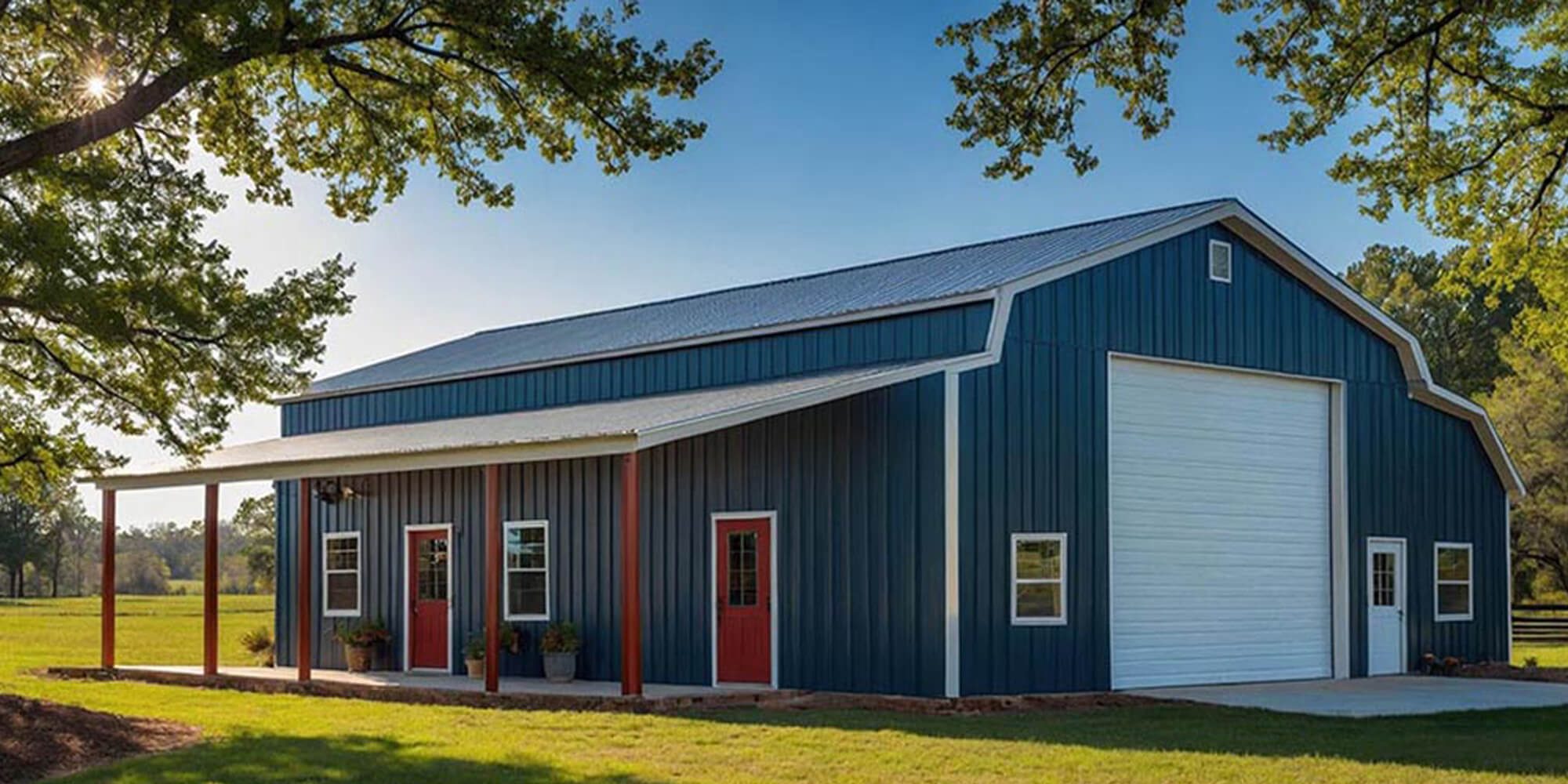
A barndominium in Northwest Arkansas typically cost $80 to $160 per square foot for a fully finished home, with shell-only construction landing closer to $71 to $120 per square foot before interior finishes, land, or site work are added in. On a 2,000 square foot home, that puts most finished builds in the Fayetteville area somewhere between $141,000 and $235,000, though the honest range stretches wider once you factor in land, a shop, and how far your finish level goes.
Here’s the thing about most barndominium cost guides: they’re written for a national audience and treat every state the same. Arkansas doesn’t work that way. Barndominiums here are almost always built on rural acreage outside city limits, which means your actual cost and process depend heavily on county zoning, not a city building department, and that’s a detail most guides never touch.
What Actually Drives Barndominium Cost
Three things move the price more than anything else: total square footage, how much of that footage is finished living space versus shop or garage, and your finish level.
The steel-frame shell, roof system, and exterior siding are a relatively fixed cost once you know your size. What varies enormously is what goes inside. A homeowner choosing LVP flooring and stock cabinetry is looking at a very different number than one choosing polished concrete, custom built-ins, and a chef’s kitchen, even on an identical footprint. That gap alone can run $40,000 to $80,000 or more on a 2,000 square foot home.
Shop or garage space costs less per square foot than finished living area, since it typically skips insulation to living-space standards, HVAC, and interior finish work. This is actually one of the financial advantages of a barndominium. You get real usable square footage under one roof, but the shop portion doesn’t carry the same price tag as the living quarters next to it.
Barndominium Cost in NWA, By Size
These figures reflect the actual size-based breakdown reported for Fayetteville specifically, excluding land and major site work. One caveat worth knowing: the source behind these numbers describes them as varying by “grade of construction” rather than clearly separating shell-only from fully finished the way we’ve done elsewhere in this guide, so treat these as a useful local reference point rather than a precise like-for-like comparison to the size figures above.
- 1,500 sq ft: roughly $106,000 to $176,000
- 2,000 sq ft: roughly $141,000 to $235,000
- 2,500 sq ft: roughly $176,000 to $294,000
- 3,000 sq ft: roughly $212,000 to $353,000
A shell-only or kit-based build, where you or your subcontractors handle the interior finish work yourselves, can run considerably less, often in the $20 to $35 per square foot range for materials alone. Just know that number covers the exterior structure and nothing else. Land, foundation, utilities, and every interior finish still need to be budgeted on top of it.
Land, Zoning, and Permitting: The Part Most Guides Get Wrong
This is where a Northwest Arkansas barndominium project genuinely differs from a generic national cost guide, and it’s worth understanding before you fall in love with a piece of land.
Arkansas has no statewide building code. Regulation happens at the county level, which means Washington County and Benton County each set their own rules, separate from whatever city ordinances apply if you’re building inside incorporated limits like Fayetteville or Bentonville. The two counties actually operate differently, which surprises people who assume “county rules” means the same thing everywhere in NWA.
Most unincorporated land in Washington County is zoned agricultural or single-family residential by right, generally allowing one dwelling unit per acre without additional approval. If your planned use falls outside that, a barndominium doubling as a small event venue, for example, you’d need to go through a Conditional Use Permit process with the county planning office before anything else moves forward.
Benton County works differently. Unincorporated Benton County has no zoning at all. Single-family and agricultural use is allowed by right without planning board review, but that doesn’t mean no rules apply. Building and electrical permits are still required through the county’s Building Safety Department, and separate subdivision and development regulations govern things like minimum lot size, setbacks, and floodplain areas. Anything beyond a single-family home or agricultural use, a commercial operation or a subdivided development still needs Planning Board approval even without formal zoning in place.
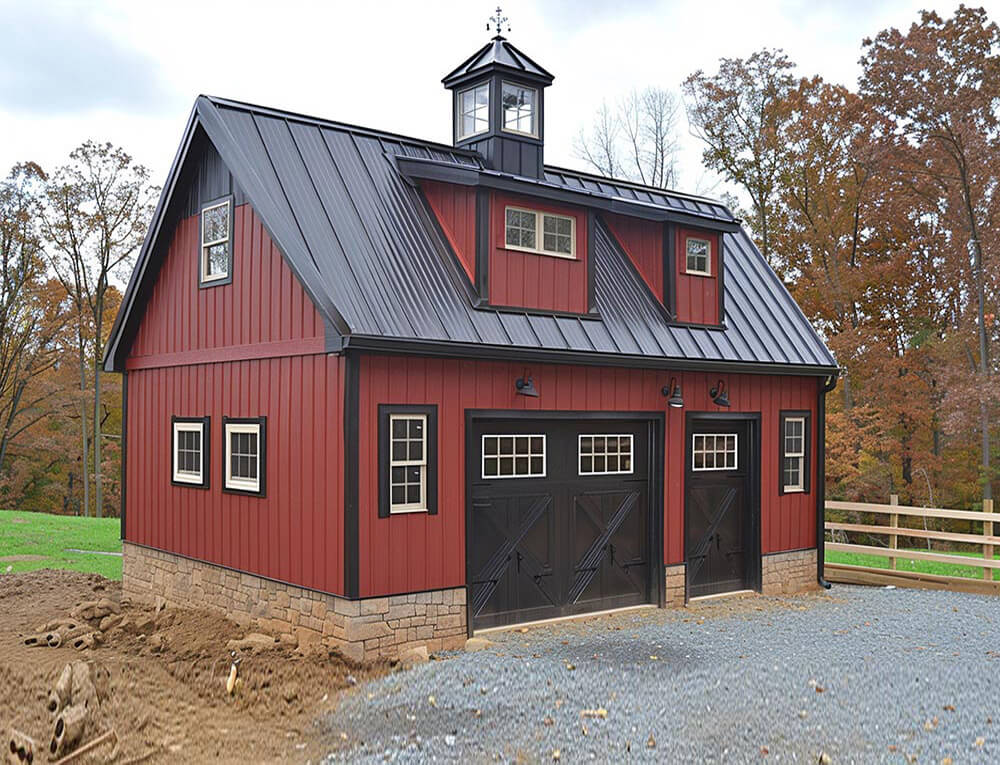
One thing that surprises a lot of buyers is how the county treats septic and addressing together. If you’re requesting a 911 address and connecting to public utilities, the Arkansas Department of Health treats that as a permanent residence, which means a proper septic system is required rather than a holding tank, and a soil or percolation test typically has to confirm the lot is buildable before that address gets assigned. Skipping this step, or assuming a piece of land is automatically buildable because it looks fine, is one of the more expensive mistakes we see people make before a contractor is ever involved.
If your land sits in a floodplain, and parts of Washington County do fall under FEMA-regulated flood zones through the National Flood Insurance Program, that adds its own layer of review and can affect both your foundation design and your insurance costs down the road.
None of this means building in NWA is complicated in a bad way. It means the land and permitting side of your budget deserves real attention before you price out the structure itself, since a beautiful lot that turns out to need an engineered septic system or a floodplain-compliant foundation can add tens of thousands of dollars you hadn’t planned for.
Adding a Shop or Garage
A big reason people choose a barndominium in the first place is the ability to combine real living space with a real workshop under one roof. That shop space adds its own cost layer beyond the base structure. The figures below reflect general industry ranges for this kind of build rather than numbers pulled from any single NWA project, so treat them as a starting point for budgeting conversations with your builder rather than a locked-in quote.
A reinforced concrete slab capable of handling equipment loads typically runs $6 to $10 per square foot, more than a standard slab. Electrical upgrades for shop use, including 220-volt outlets and dedicated circuits for tools or equipment, commonly run $5,000 to $15,000 depending on scope. Ventilation for dust, fumes, or basic climate control in the shop area adds another $2,000 to $8,000. Overhead doors run roughly $1,000 to $5,000 each, and most layouts end up needing at least two.
None of these numbers are optional add-ons you can easily skip if the shop is a big part of why you wanted a barndominium in the first place. They’re worth pricing early, not after the shell is already framed.
Financing a Barndominium
This is worth mentioning honestly, since it catches people off guard. Traditional mortgage lenders sometimes treat barndominiums differently than a conventional stick-built home, partly because appraisers have fewer comparable sales to work from in some areas, and partly because the hybrid classification, part home, part shop, doesn’t always map cleanly onto standard appraisal categories.
Most buyers end up using a construction loan that converts to a permanent mortgage once the build is complete, and it’s worth having this conversation with a lender early, before you’re deep into land and design decisions, rather than after.
How Long Does It Actually Take
Builders working across Arkansas commonly cite four to six months from a finalized plan to move-in as a typical range for a barndominium. However, this is a general industry estimate rather than a fixed local number. It depends heavily on size, how custom the interior finish is, and how quickly your specific county processes permitting and any required inspections. Land preparation, well or septic installation, and utility hookups can add meaningfully to that timeline if your property doesn’t already have them in place.
Frequently Asked Questions
How much does a barndominium cost per square foot in Northwest Arkansas? Fully finished builds typically run $80 to $160 per square foot. Shell-only construction, before interior finishes, land, or site work, runs closer to $71 to $120 per square foot.
Is a barndominium actually cheaper than a traditional home in NWA? Generally yes, often by 15 to 25 percent on the structure itself, mainly due to the steel-frame shell and open floor plan reducing framing costs. That gap narrows once premium interior finishes and shop upgrades are added in.
Do I need a county permit or a city permit to build a barndominium? It depends entirely on whether your land is inside incorporated city limits or in unincorporated county territory. Most NWA barndominiums sit on unincorporated land, which means Washington County or Benton County zoning and permitting applies, not a city building department.
Can I build a barndominium anywhere in Washington County? Most unincorporated land is zoned agricultural or single-family residential by right, generally at one dwelling unit per acre. Uses outside that classification typically require a Conditional Use Permit through the county planning office.
Is Benton County zoning different from Washington County? Yes. Unincorporated Benton County has no zoning at all, so single-family and agricultural use is allowed by right without planning board review. Building and electrical permits are still required, and separate subdivision and floodplain regulations still apply, but the underlying framework is different from Washington County’s zoning-based system.
Do I need a septic system for a barndominium in NWA? If you’re requesting a 911 address and connecting to public utilities, yes. Arkansas treats that combination as a permanent residence, which requires an approved septic system rather than a holding tank.
How much does a shop or garage add to a barndominium’s cost? Expect added costs for a reinforced slab, upgraded electrical for equipment, ventilation, and overhead doors. Together, these commonly add tens of thousands of dollars depending on the shop’s size and intended use.
Is it hard to get a mortgage for a barndominium? It can be more complicated than a conventional home loan, partly due to fewer comparable sales for appraisers to reference. Most buyers use a construction loan that converts to a permanent mortgage once the build is finished.
How long does it take to build a barndominium in NWA? Roughly four to six months from a finalized plan to move-in for most projects, though land prep, septic or well installation, and county permitting timelines can extend that.
What’s the difference between a barndominium kit and a fully custom build? A kit provides the pre-engineered shell, materials, and assembly instructions, typically at $20 to $35 per square foot, but doesn’t include the foundation, utilities, or any interior finish work. A fully custom build includes design, all trades, and finish work as one coordinated project.
Does land in a floodplain affect my barndominium build? Yes. Parts of Washington County fall under FEMA-regulated flood zones, which can affect foundation requirements, insurance costs, and the overall permitting process for that specific parcel.
The Bottom Line
A barndominium in Northwest Arkansas can be one of the more cost-effective ways to get real square footage and a real shop under one roof, but the honest total depends on far more than a per-square-foot number. Land, county zoning, septic requirements, and how much of the interior you finish out all move that final figure meaningfully.
If you’re weighing land in Washington County, Benton County, or anywhere else across Fayetteville, Bentonville, Rogers, Centerton, or Farmington, Torres Construction Group has walked homeowners through exactly this process, from evaluating a piece of land before you buy it to pricing out a shop that actually fits how you plan to use it.
Contact us to talk through what your specific land and vision would actually cost to build.